





Description
The north-eastern coastline of the municipality of Bonifacio has, on the whole, retained a very natural character over a stretch of around ten kilometres, and the Conservatoire has already acquired nearly 300 hectares there in the Rundinara and Sarpente areas. The Balistra Lagoon and its surroundings complete the protection of this vast area.
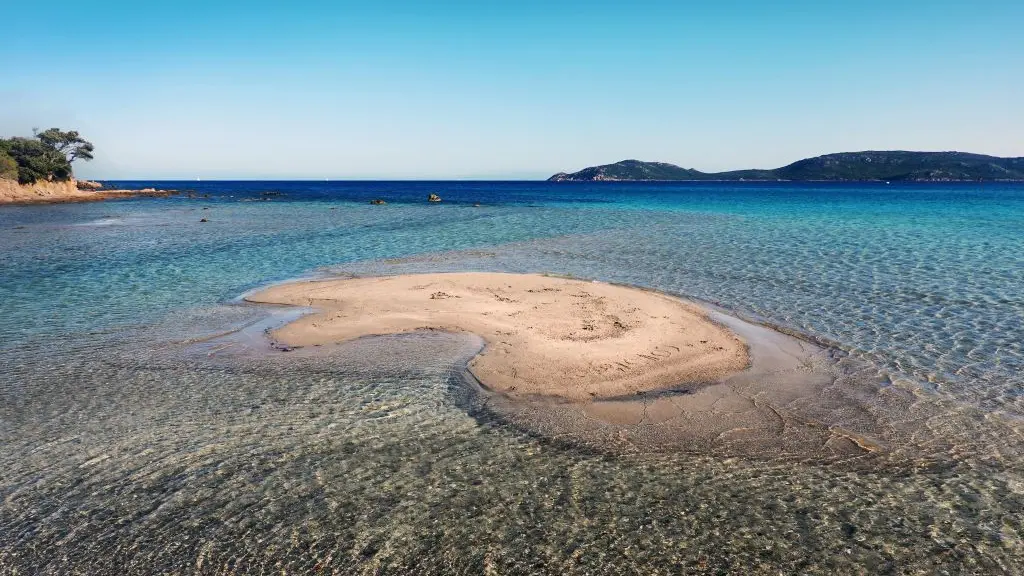
The Balistra Lagoon is one of the main medium-sized lagoons on the Corsican coast. It is a body of water covering around 100 hectares with a maximum depth of 10 metres, featuring a small marshy area at the mouth of the Francolu stream, which feeds the lagoon from upstream. It was formed when the sea flooded a coastal area that had collapsed. The beach and the lagoon sandbar, which stretch for nearly a kilometre, are home to sandy habitats and plant communities characteristic of this type of environment on the Mediterranean coast. Unfortunately, this sandbar has been severely degraded by unregulated traffic and uncontrolled visitor numbers.
History
In the recent history of the area, the French military authorities built a bunker as part of the ‘Little Maginot Line’, constructed before the Second World War, mainly in southern Corsica, to prevent an Italian invasion from Sardinia. These fortifications were decommissioned and subsequently handed over to the Italian occupying forces following the Armistice concluded by Marshal Pétain.
Habitats and flora
The vegetation along the banks consists of maquis that surrounds the pond almost continuously and extends right down to the water’s edge. In some places, the transition to the water is marked by a narrow belt of sharp rushes, sea rushes and Agropyrum. This vegetation is also found in the small coves. At the far end of the pond, in the marshy area where the Francolu stream flows into it, there is a very extensive stand of sansouïre, mixed with sharp rush, sea rush… The dune is covered with a few tufts of reed-stemmed couch grass. There is a Phragmites stand to the north of the grau.
The wetland habitats, dune environments and areas of scrub and rocky outcrops offer a good variety of flora, including numerous plants of heritage interest, several of which are endemic, rare and/or protected.
Fauna
In terms of birdlife, Balistra Pond comprises two distinct areas: the body of water and the mouth of the Francolu stream.
The mouth of the Francolu consists of the stream bed which flows into a marsh. The more or less dense vegetation cover comprises a sansouïre mixed with sharp-leaved and sea rushes. A few pools and channels, filled with water, break up the sansouïre. This area is favourable for waders and amphibians such as the Sardinian discogloss, the Balearic green toad and the Sardinian tree frog, as well as reptiles such as the European pond turtle.
The body of water is a vast bay, with shores covered in maquis, enclosed by a coastal sandbar. The vegetation on the shores is very sparse (sea rush) in the inlets. This area is favourable for the great cormorant and the great crested grebe. Diving ducks are occasionally sighted here. It is home to a small fish found in Mediterranean lagoons, the rare Valencian cyprinodontid.
In the maquis and rocky habitats, one can spot Hermann’s tortoise, the Tiliguerta lizard and geckos such as the European leaf-footed gecko and the warty-toed gecko.
Balistra is also one of the very few sites where a Corsican-endemic orthopteran (grasshoppers and locusts), the Porto Vecchio Decticella, can be found.
Camping, wild camping, open fires, littering and the use of motor vehicles are prohibited.
Services
Free parking
Parking
Lifeguard station (beach)
Location
Plan interactif : 1 lieux répertoriés.
- Lieu sans nom
Environment
Environment
- By a beach : Balistra