







Description
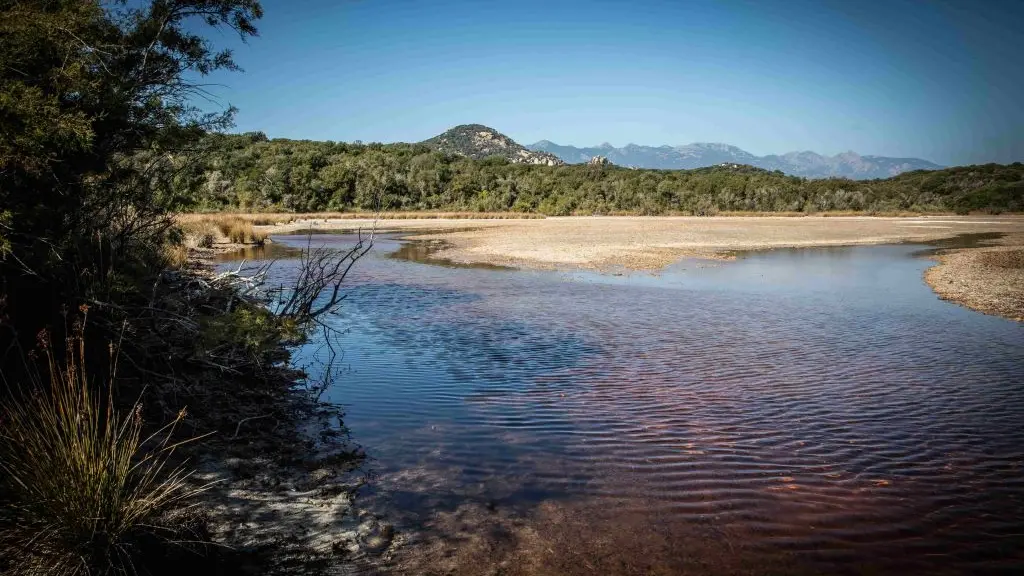
The Testa–Ventilègne site comprises the Fenu-La Trinité massif, the wetlands at the head of the Gulf of Ventilègne and the Testa headland, bounded to the west by Figari Bay.
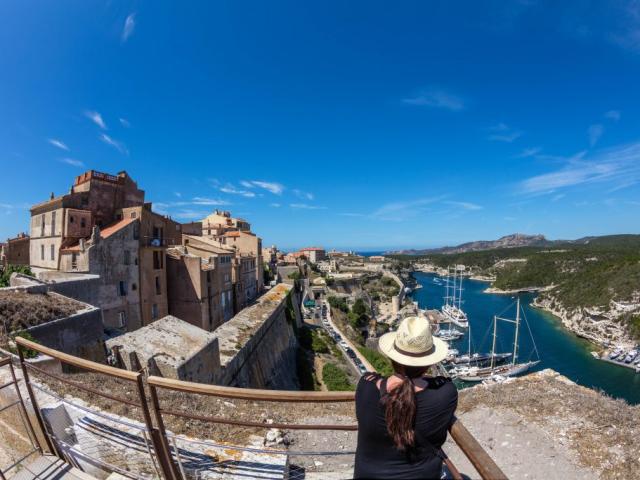
The Conservatoire’s area extends eastwards to the Bonifacio Cliffs and well beyond to the east (as far as Propriano) along a coastline that benefits from numerous conservation measures.
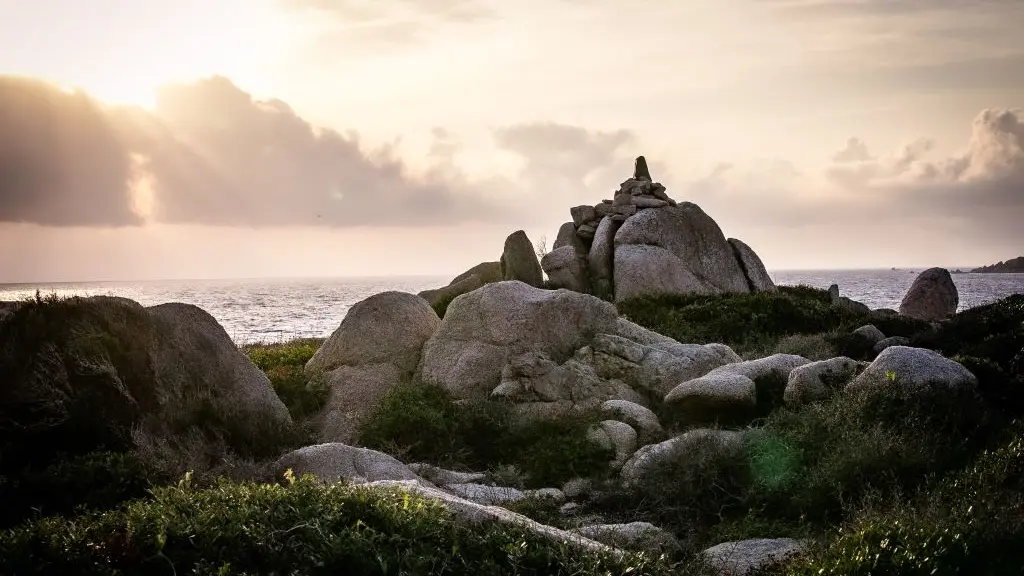
Paragan Bay marks the end of the limestone and the return of granite, whilst the impressive rock formations of La Trinité dominate the coastline. After passing the Fenu lighthouse, the coast becomes gentler as one heads towards La Tonnara; with a few rocks rising like monoliths, glowing in the sunset. Stagnolu Bay, with its dune and small marsh, heralds the little cove of La Tonnara and its islets. The path crosses the Pisciu Cane and Testarella ponds, at the far end of this bay favoured by kitesurfers. The Testa headland, overlooked by Monte Scupetu, juts gently out into the sea. Small coves and coarse golden sands alternate with grassy areas, marshes and rocks whose shapes spark the imagination. The further one goes towards the tip, the more stunted the vegetation becomes as it struggles to withstand the powerful winds.
Flora and fauna
La Trinité is a hotspot for the island’s biodiversity. For example, it is the only place in the world where a plant known as the three-veined centranthe grows; this species is listed as threatened by the IUCN and numbers fewer than 150 specimens. The Bedriaga lizard, a species endemic to Corsica and Sardinia, is also found here; it is not present anywhere else along the coastline in this area. Furthermore, there are three species of gecko, including the warty hemidactyl, which has the highest population densities in France in this area of the far south of Corsica.
La Testa is a vast rocky promontory bounded to the north by the N196 and to the east by the Pisciu Cane lake. The inland area consists of a series of hills and small valleys covered in maquis of varying heights. In places, this maquis vegetation gives way to wooded areas dominated by holm oak or cork oak. The rocky coastline is very indented, but several small sandy beaches break up its course. Along this coastline, the maquis gives way to adapted halophilic vegetation dominated by groves of mastic trees. The beaches are colonised by vegetation characteristic of dunes. A total of 8 key habitats and 13 key species have been identified. Among the key species, the majority are plants characteristic of the Corsican coastline, such as Matthiola tricuspidata, Evax rotundata and Ambrosina bassii. Also noted in the area are a small temporary Mediterranean pond and coastal marshes with glasswort, known as ‘les salines’.
Among the animal species, the Hermann’s tortoise (abundant), the European phyllodactylus and the two subspecies of the Sicilian lizard (the one from Tuscany and the Sardinian one) are present. The Sardinian discogloss and the Sardinian tree frog breed in small pools of fresh or slightly brackish water.
Services
Free parking
Parking
Location
Plan interactif : 1 lieux répertoriés.
- Lieu sans nom